
Reviewed · AUDIO TOURS
Heraklion Archaeological Museum Ticket & Audio Guide
Getting into the Heraklion Archaeological Museum is only half the win. The smart part is that you get a pre-booked e-ticket plus a self-guided audio guide sent to your email, then downloaded for offline use on your phone. You can move room to room without waiting on a group schedule.
I especially like two things: the offline audio from Clio Muse that helps you notice what matters, and the freedom to pause when you want to slow down for a specific artifact. One thing to keep in mind is that your visit depends on your smartphone, so charge up, bring headphones, and be flexible if parts of the museum are closed or the app’s flow feels slightly off.
If you want a museum that covers Cretan prehistory through Roman times, this is a great way to do it at your own pace. The included audio is also reusable, so you can listen before you go, and again after, when everything starts to make more sense.
Key things I’d focus on before you book

- Pre-booked admission delivered by email so you spend less time fussing at the desk
- Clio Muse offline guide with text, narration, and maps on your phone
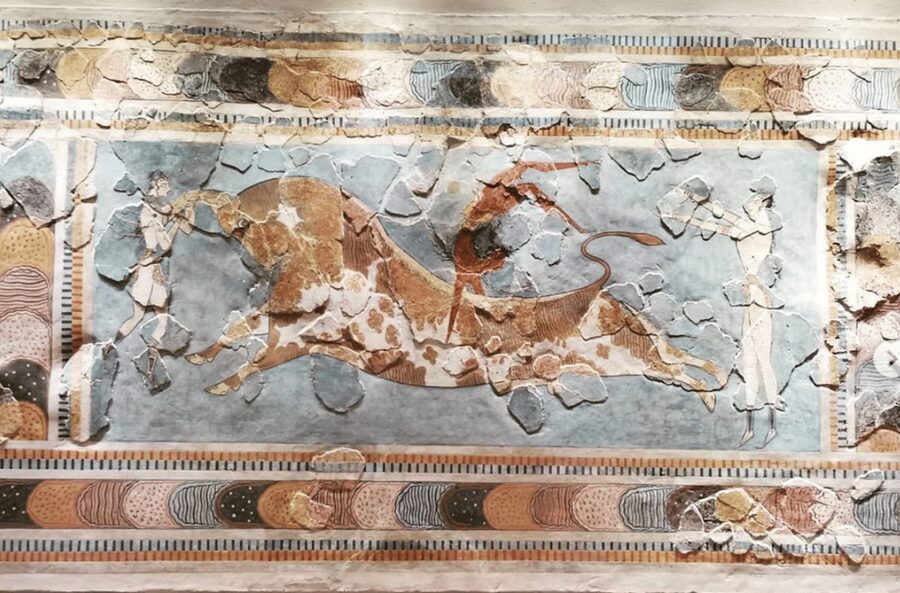
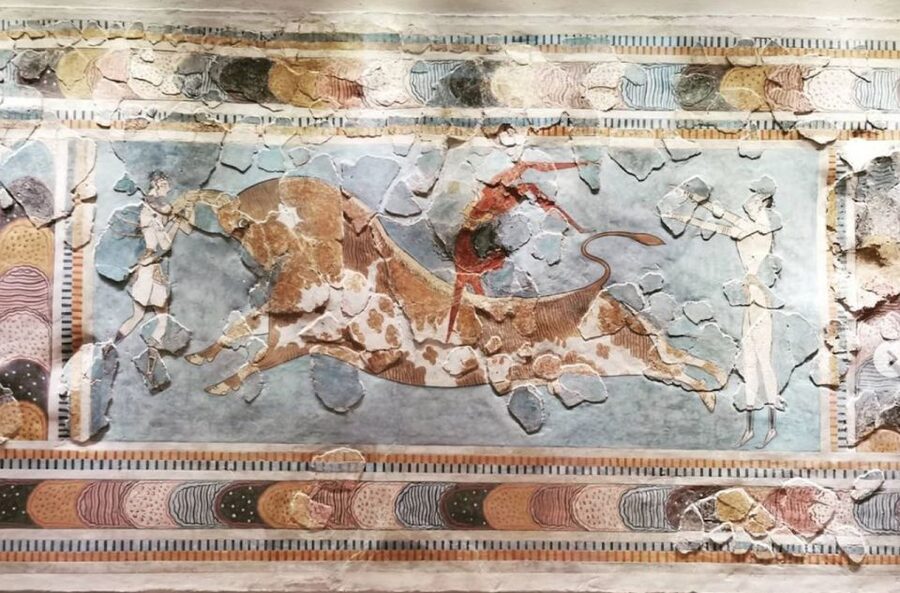
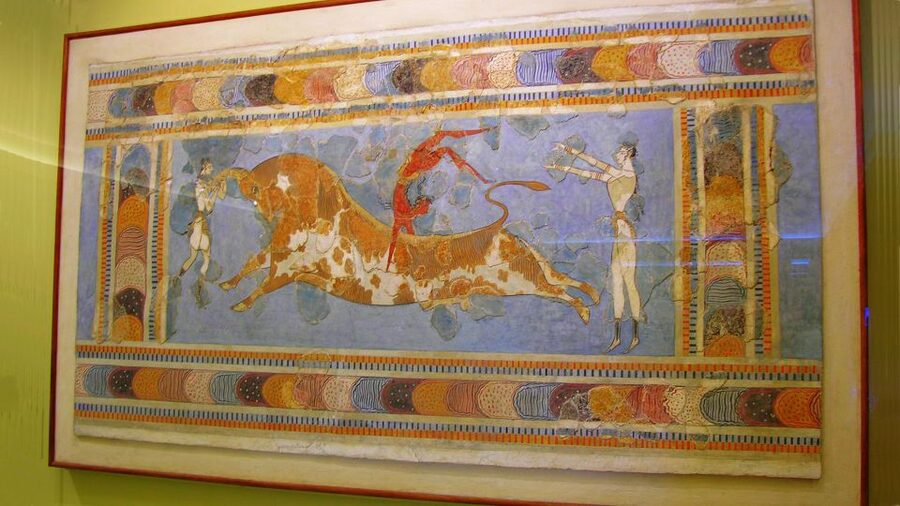
- Minoan set pieces you’ll be guided to, including the Phaistos Disk and bull-leaping fresco scenes
- Time flexibility for a quick highlights loop or a longer, slower museum sweep
- Repeatable audio you can use before or after your visit, not just once
From Your Email to the Museum Door in Heraklion
This experience is built for an easy entry. Instead of hunting down a ticket counter, you get your regular admission ticket electronically and use it to get into the Heraklion Archaeological Museum when you arrive.
Here is the practical rhythm that works best:
1) Before your visit, download the app content and audio to your smartphone.
2) Then bring your ticket and open the guide when you’re inside.
3) Use the museum at your pace, not on someone else’s timing.
You’ll want a charged smartphone and headphones ready. The audio guide includes offline content (text narration and maps), so you are not stuck hunting for Wi-Fi while standing in front of ancient objects that do not care about your signal strength.
One more useful detail: the meeting point can vary depending on what option you booked, so rely on the confirmation info you receive and build a bit of buffer time.
More museums and sites in Crete:
- Crete: Knossos Palace and Museum E-Tickets with Audio Guides
★ 4.0 · 828 reviews - Lychnostatis Open Air Museum: Entry Ticket with Add-Ons
★ 4.8 · 49 reviews - Knossos Palace & Archaeological Museum Private Tour
★ 4.8 · 23 reviews
Using the Clio Muse Offline Audio Guide Like a Local
The audio guide is the heart of this add-on, and it is designed for smartphone listening in real time. It’s available for both Android and iOS, and it covers a long timeline of Cretan life, from the Neolithic period to Roman times.
What I like is how the narration behaves. The audio is meant to be a guided walk through key items and themes, but you can pause and go back. That’s important in a museum like this, because the most interesting things are often the ones your eyes catch before your brain has processed the labels.
A few details that matter for how you experience it:
- Offline maps help you figure out where you are without relying on data.
- The guide is built for self-paced visits, and people found the tour pacing works well when you pause for a closer look.
- You can use the tour multiple times, anytime, before or after your visit.
Real-world listening tips based on how people described their experience:
- If you want to share, splitting one phone’s audio with two earbuds can work, like two people listening together via AirPods.
- Sometimes the app flow can feel like it skips ahead, or you can lose the thread of what room is next, especially if parts of the museum are closed. When that happens, don’t panic. Use your own eyes first, then restart the section when you’re ready.
- The top floor can be confusing if the recorded route does not match current room order. In that case, treat the audio as a highlight track, not a GPS that must be followed perfectly.
The takeaway: the audio guide is excellent for finding meaning fast. It does not replace wandering. It makes wandering smarter.
Minoan Highlights You Should Put at the Top of Your List
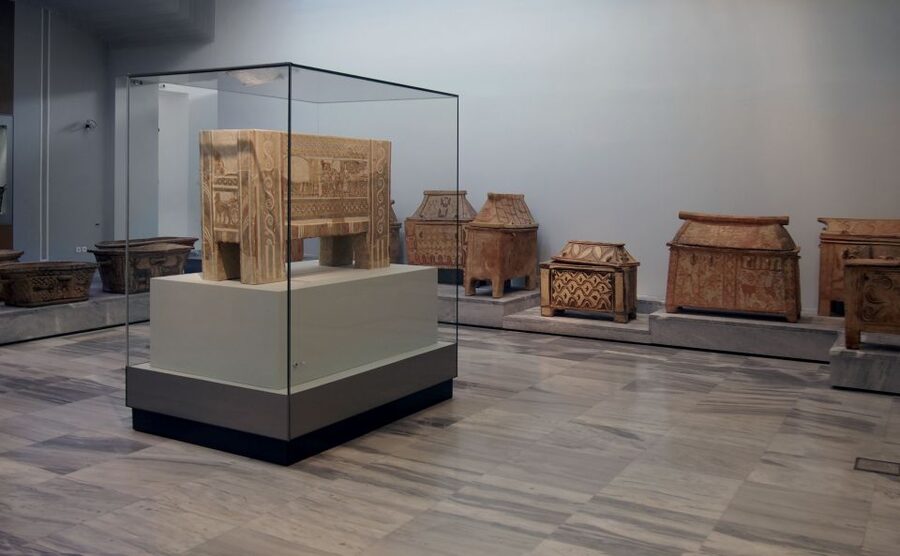
This museum is known for its Minoan focus, and the included audio helps you see why. You are walking through Cretan prehistory and history over a span of more than 5,500 years, so you get context for how styles, tools, beliefs, and power changed over time.
The biggest headline attractions mentioned for this experience are worth planning around:
- Phaistos Disk: If you only remember one object as a symbol of Minoan mystery, this is it. The guide helps frame what makes it so talked about, so you do not just stare at it like a decorative plate.
- Minoan fresco scenes, including the bull-leaping imagery: These frescoes are the kind of art that feels alive, even behind glass. Seeing the scene without context can still be impressive, but having the story attached makes it stick.
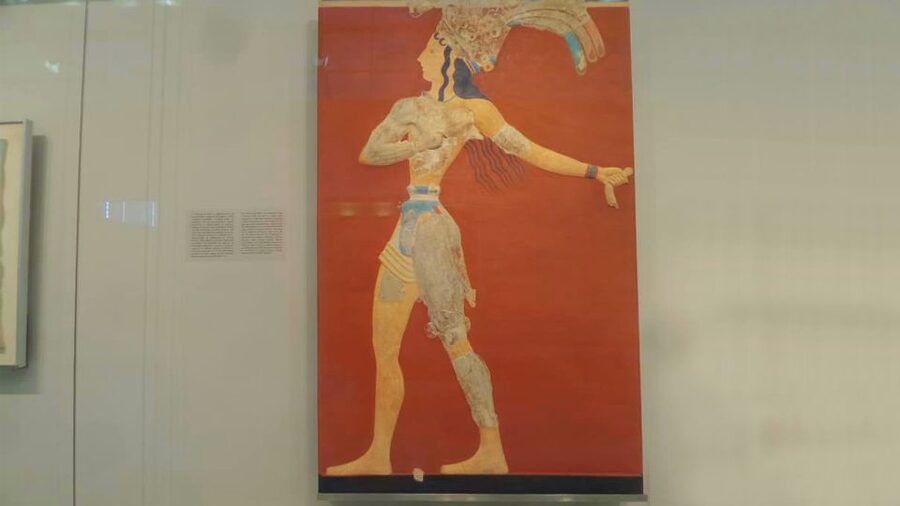
You’ll also encounter exhibits from different periods of Cretan prehistory and history. That chronological structure is one of the best ways to understand a culture. Instead of treating each room like random cool stuff, you start connecting the dots, and the museum feels less like a storage building for artifacts and more like a timeline you can actually follow.
A good strategy: let the audio lead you to the anchors first. Then, once you’ve got the big picture, spend extra time anywhere the guide nudges you but you want to look longer.
How Long to Spend: 1.5 Hours for Highlights, 2 to 2.5 for Everything
The official duration range is 1 to 4 hours, which is honestly accurate because your pace controls the outcome. The audio-led visit people described often lands around about an hour and a half, especially when you stay focused on the main highlights.
But if your goal is to see a lot beyond the most famous pieces, I’d plan longer. One of the most useful tips from experience is simple: allow at least 2 to 2.5 hours if you want a real sweep. Shorter visits tend to feel rushed, and some rooms can be closed, so you might spend extra time adjusting your route.
Here’s a practical way to schedule your time once you arrive:
- Start with the audio’s early highlights so your brain grabs the main themes fast.
- After that, shift into free exploring. Follow your curiosity, not the clock.
- Keep one extra buffer at the end for anything you passed too quickly.
The flexibility is one of this experience’s strengths. You can do a focused museum hour, or you can turn it into a slower cultural session.
A few more Crete days worth comparing
- Crete: Knossos Palace Entry Ticket with Optional Audio Guide
★ 3.9 · 2,251 reviews - Chania: Balos Gramvousa Cruise with Transfer and Boat Ticket
★ 4.1 · 925 reviews - Knossos Palace Skip-the-Line Ticket & Private Guided Tour
★ 4.9 · 633 reviews - Rethymno Area: Gramvousa Island & Balos, Boat Ticket Extra
★ 4.3 · 594 reviews
Know Before You Go: Headphones, Bathroom Timing, and Room Closures
Small logistics decide whether a museum visit feels smooth or annoying. Here’s how to get the smooth version.
Bring:
- Headphones
- A charged smartphone
Not allowed:
- No smoking
- No pets
Wheelchair access is available, so the venue itself supports that.
Now, the real tip that surprised me in spirit: arrive early for reasons beyond just parking. People mentioned arriving early can help with basic “human needs” like bathroom lines, which matters more in summer. Plan to be early enough that you are not starting your museum on low battery and low patience.
Also, be aware that parts of the museum can be closed. When that happens, the audio guide may not line up perfectly with your path. That’s not a deal breaker, but it does mean you should keep your expectations realistic. Use the audio as guidance, then rely on signage and your own eyes when something doesn’t match.
If you notice the top floor feels out of sequence compared with the recorded audio flow, don’t treat it as a failure. Just keep your momentum by exploring the rooms in the order you can access.
Value Check: Is the Audio Worth Paying Extra for $33?
At $33 per person, you are paying for two things beyond a basic entry ticket: the convenience of pre-booked admission and the quality of a structured audio narrative.
Here’s how I judge value for this kind of museum add-on:
- If you already plan to read every label carefully, a standard ticket might feel sufficient.
- If you want to understand what you are seeing without spending your vacation time scanning small text, the audio guide becomes the value maker.
The included audio is not just general background. People described the narration as researched and focused on key exhibits, with storytelling that makes the significance of objects more concrete than museum signs alone. The guide also helps you keep moving, which is huge when a museum is full of rooms and you do not want to wander in circles.
One more practical value angle: the audio can be used repeatedly. So if you want, you can listen again after the visit to “reconnect” the experience while the artifacts are still fresh in your mind. That turns one visit into a longer learning session.
If budget is tight, you could still enjoy the museum without the audio. But if you care about getting meaning from the Minoan art fast, this add-on is easy to justify.
Who This Works Best For (and When to Pair It With Knossos)

This is best for people who want structure but not rigidity. The self-guided format lets you choose your pace, and the audio helps you pick out what to prioritize in a museum that spans thousands of years.
It’s also a strong fit if you are planning to visit Knossos afterward. People noted the audio guide can be particularly helpful if you want your Knossos experience to make more sense, because it primes you with how the Minoan world is presented here.
You’ll likely like it if:
- You prefer podcasts or audio narration during sightseeing
- You want to avoid a live guide schedule
- You are traveling in a small group or as a couple and want flexibility
- You want offline maps so you can move around confidently
When might you skip the audio? If you hate listening devices on vacation or you only want a quick photo run, the basic museum entry might satisfy you. Still, even then, having the option ready can be handy.
Should You Book This Ticket and Audio Guide?
Yes, I think booking makes sense for most people, especially if you want a guided highlights experience that you control. The pre-booked e-ticket removes friction, and the Clio Muse offline audio turns a room-by-room museum into a clearer story you can follow.
Book it if:
- You want to see key Minoan objects like the Phaistos Disk and dramatic fresco scenes such as bull-leaping
- You’d rather pause and explore than rush on a timed group visit
- You want something that works well in about 1.5 hours for highlights, or 2 to 2.5 hours for a deeper sweep
Skip it only if you already know you won’t use audio at all, or if you prefer purely label-based self-reading. Otherwise, this is a smart, low-stress way to get more from one of Greece’s most important museum stops.
FAQ
How do I get my admission ticket?
You receive your Heraklion Archaeological Museum ticket by email after booking, and you use that for regular entry.
Is the audio guide available offline?
Yes. The audio guide includes offline content like text, narration, and maps, so you can use it inside the museum without relying on internet.
How many languages are available in the audio guide?
The audio guide is available in English, German, French, Spanish, and Italian.
Do I need to follow a fixed route with a live guide?
No. This is self-guided, and you can explore at your own pace. A live guide is not included.
How long should I plan for the visit?
The experience duration is 1 to 4 hours. Many people reported the audio-led highlight tour takes about 1.5 hours, while others recommended allowing 2 to 2.5 hours to cover more of the museum comfortably.
Is the museum wheelchair accessible?
Yes. The experience is listed as wheelchair accessible.
Are there discounts for youth and seniors?
Yes. EU citizens aged 0 to 25 get free admission (with ID shown). From April 1 to October 31, non-EU citizens aged 6 to 25 get 50% reduced admission with a passport. From April 1 to October 31, seniors over 65 from Greece or other EU countries get 50% reduced admission. Children up to age 5 from non-EU countries get free admission with a passport.
Is this booking refundable?
No. The activity is listed as non-refundable.
Fresh options around Crete
- Island Spinalonga, Milatos Cave, Speedboat, OliveTasting★ 4.6 · 17 reviews
- Lasithi Plateau & Zeus Cave: Myths and Villages Tour★ 5.0 · 13 reviews
- Heraklion: Self-Driving 4X4 Jeep Off-Road Tour with Lunch★ 4.6 · 26 reviews
- Samariá Gorge Hike: Day Excursion from Chania★ 4.4 · 49 reviews
- Rethymno: Balos &Gramvousa Day Trip With/Without Boat Ticket★ 3.5 · 17 reviews
- Rethymno: Old Town Segway Tour★ 4.9 · 39 reviews
- From Rethymno: Lake Kournas and Villages Full-Day Tour★ 4.4 · 45 reviews
- Knossos Palace Guided Walking Tour (Without Tickets)★ 4.6 · 32 reviews
Audio Tours, compared.

Knossos Palace Entry Ticket with Optional Audio Guide
Read our review →

Knossos Palace and Museum E-Tickets with Audio Guides
Read our review →
Palace of Knossos 3D Virtual Audio Tour by Tablet
Read our review →Knossos Palace and Museum E-Tickets with Audio Guides
Read our review →
Knossos E-Ticket with Audio Guide & Optional Museum
Read our review →
Knossos Palace: E-ticket with Audio and Heraklion City Tour
Read our review →
Archaeological Museum Ticket with City Audio Tour
Read our review →Browse the lists this tour appears in