
Reviewed · HISTORICAL TOURS
WWII – The Battle of Crete Day Tour
WWII on Crete is the kind of story that feels too big for one island day, until you ride the routes and stand where it happened. This tour is interesting because it ties the battle’s main moves to real places you can actually look at, not just maps. I love the small group size (max 15) and I love that you get a proper English-speaking local guide/driver who can answer follow-up questions. The main drawback to keep in mind is time, it is only about 6 hours, so the tour moves at a steady pace.
You’ll start in the Chania area around 9:00 am and use an air-conditioned minivan for the ride between sites, with entrance fees and pickup/drop-off included. Guides like Yannis, Ioannis, Giannis, and Babis come up in guest notes again and again for clear explanations, empathy, and keeping the day understandable even if you are not a military-history superfan. If you want to wander slowly or get hours on end at each cemetery, this may feel a bit brisk.
Key things I’d plan around
- Small group (up to 15), so questions do not get pushed to the back of the bus
- Pickup and drop-off in the Chania region, which saves you the hassle of solo logistics
- Four major WWII stops with set time blocks (Maleme, Tavronitis Bridge, German cemetery, Souda Bay Commonwealth cemetery)
- Entrance fees handled, plus snacks and bottled water to keep you going on the road
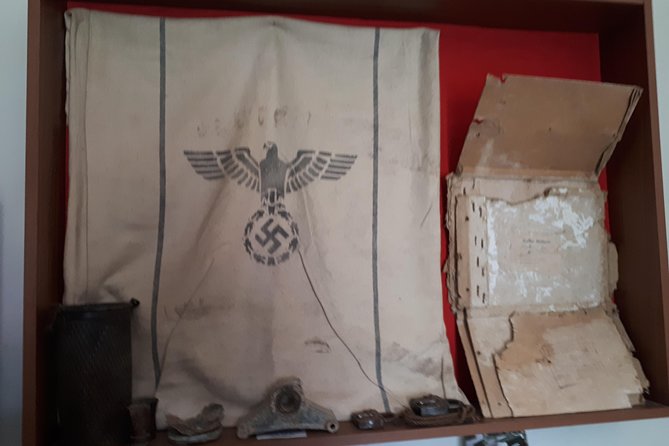
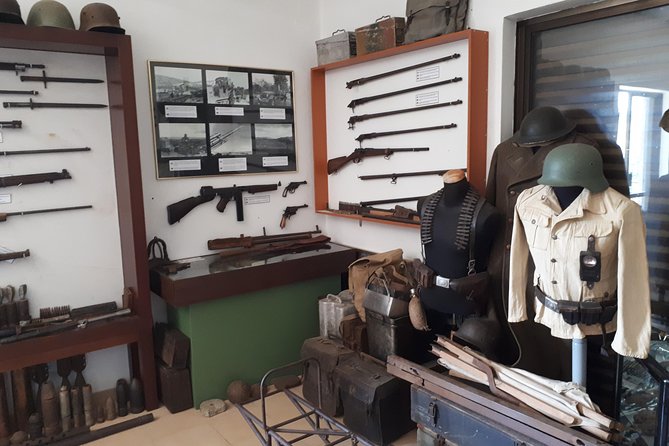
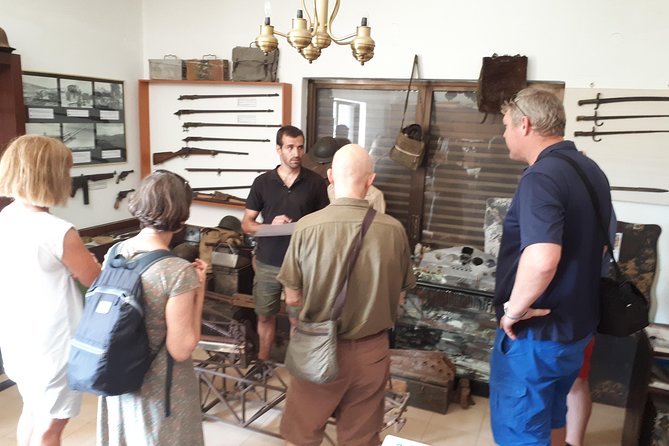
- A personal WWII memorabilia stop with a local collector, adding texture beyond the battlefield view
- Cemeteries on both sides, so you leave with perspective on the human cost, not just tactics
WWII Battle of Crete, why this one-day route works
The Battle of Crete is one of those moments in history where the geography matters. Plains, roads, and bridges shape what invading forces can do, and what defenders can hold. This tour is built around that idea. You get out at key areas, then you connect the dots while someone points to the land and explains how decisions played out in the real world.
The best value here is not that you get “a few stops.” It is that the sequence makes a narrative in your head: landing and airfield areas, movement through transport points like bridges, then the aftermath shown through cemetery visits. On a self-guided trip, it is easy to bounce from one spot to another without the threads that make it make sense.
More historical tours in Crete:
- From Heraklion: Historical Center City Tour & Knossos Palace
★ 4.4 · 340 reviews - Richtis Waterfall, History, Azoria, OliveTasting, NorthCoast
★ 5.0 · 83 reviews - Chania Battle of Crete Private Tour: WW2 Military History
★ 5.0 · 16 reviews
Price and the real value of $114.89
At about $114.89 per person for a roughly 6-hour outing, you are paying for more than a seat in a van. The price bundles several things people usually end up paying for separately: pickup and drop-off from the Chania region, transportation in an air-conditioned minivan, and entrance fees.
Add in snacks and bottled water per person, and you have fewer “what do we do now” moments. Reviews consistently mention good organization from pickup to drop-off, which matters because on a day like this, you want your time used for the sites, not for navigation.
If you are traveling with limited time in Chania, this pricing often makes sense because it concentrates the WWII storyline into one coordinated route. If you are the type who wants to spend the whole day at one place, you might feel squeezed. But if you want context fast, it is a practical choice.
Getting from Chania to the battle sites: how the day is run
Your tour starts at 9:00 am. You are collected from specific pickup places in the Chania region, then you are dropped back at the same meeting point when you are done. That end-back arrangement is not a small detail. It keeps your day simple and avoids the “now I have to solve transport again” problem.
The group stays small, with a maximum of 15 travelers, and the tour runs with an English-speaking local driver/escort. In practice, that combination makes the experience more conversational. Multiple guest notes mention guides who handled lots of questions and did it without turning the day into a lecture you cannot pause.
You also get a mobile ticket, which is handy if you hate digging for printed papers while standing outside a gate. The tour notes say it is near public transportation, but the whole point is that pickup is included for the Chania region.
One practical note: this is a good day to wear comfortable shoes. Cemeteries and viewpoints can involve uneven ground and walking. Even if most stops are timed fairly tightly, you will still want grip and support.
Stop 1: Maleme, the starting point that sets the scene
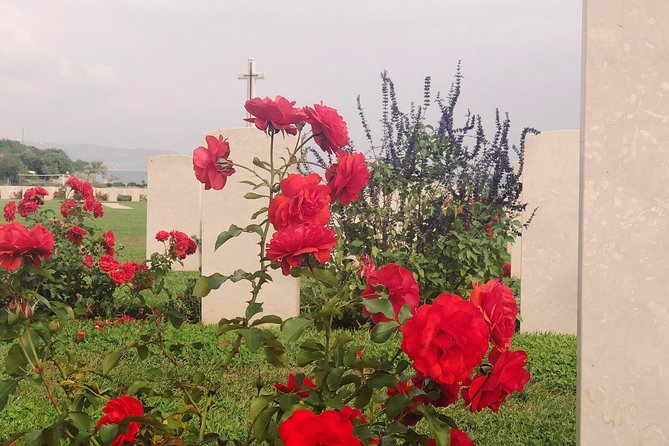
You begin at Maleme. This is the first big moment of the day and it is a smart way to start because it gives you a mental baseline for what happens next. The tour allows about 50 minutes at Maleme, with admission ticket listed as free.
Why Maleme matters for your understanding is simple: it anchors the story to an actual place tied to the early phase of the 1941 invasion. Standing there helps you stop thinking of the battle as “events in a book,” and start thinking of it as movement on land.
The time here is long enough to take photos, read the basic layout, and ask your guide questions that will matter later. If you arrive tired, Maleme is still worth paying attention to, because it is the reference point you will keep using as the tour shifts to bridges and cemeteries.
More full days out from Crete:
- Crete: Day Trip to Agios Nikolaos and Spinalonga Island
★ 4.6 · 4,416 reviews - From Chania: Day Trip to Elafonisi Island Pink Sand Beach
★ 4.5 · 2,014 reviews - Crete: Rethimno, Chania, and Kournas Lake Day Trip
★ 4.4 · 1,694 reviews - Rethymno: Preveli Beach Damnoni Beach Kourtaliotiko Day Trip
★ 4.3 · 929 reviews
Stop 2: Tavronitis Bridge, where movement becomes meaning
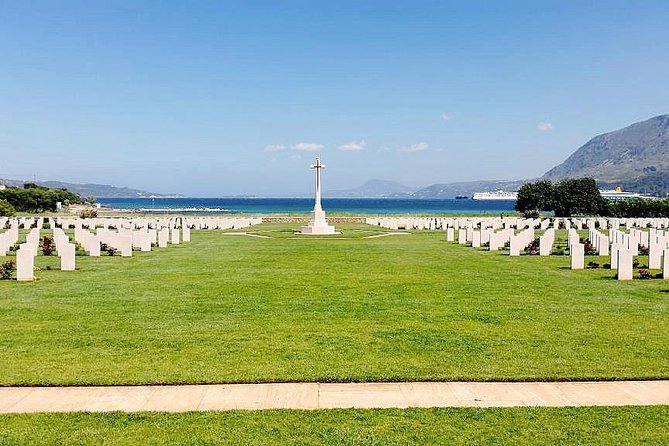
Next you head to Tavronitis Bridge, with about 40 minutes on the stop and admission ticket included. Bridges are not just landmarks. In an invasion scenario, they control routes, slow down or speed up movement, and become choke points during a crisis.
This is where a good guide earns their lunch. The best tours help you see why someone would fight for a crossing, why defenders would care, and how a single transport route can affect outcomes over multiple days. Guests highlight that guides like Yannis and Ioannis do well at explaining strategy in a way that stays human, not robotic.
If you only glance at the bridge and move on, you will miss the value. I recommend pausing, letting your guide explain what the area meant, then walking around so the views match the story in your head.
Stop 3: The German Military Cemetery, confronting the aftermath
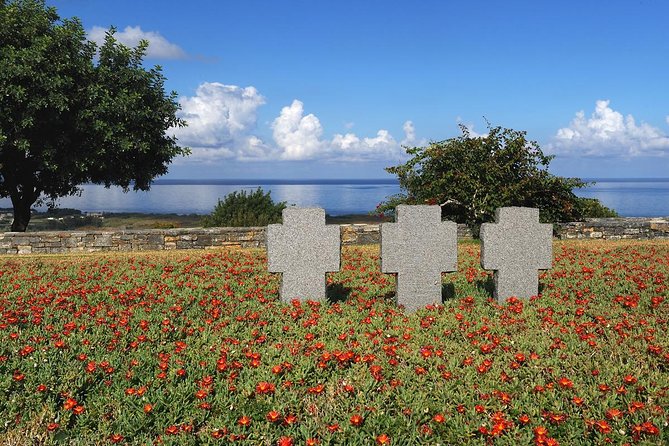
After the route-focused stop, the day turns reflective at the German Military Cemetery. You spend about 30 minutes here, with admission included.
Cemeteries are where the battle stops being “units” and becomes individual lives. The tone at sites like this depends heavily on the guide, and that is one reason guest notes keep praising the way guides delivered information with empathy. Even if you came in for tactics, you still need this moment to understand the cost.
This stop also balances the day. You are not only seeing one side’s narrative. In a short timeframe, that balance is a gift. It helps you leave with perspective instead of a one-sided story.
Give yourself permission to slow down a bit here. Photos are fine, but take a few seconds to really read, look, and absorb. This is not the part of the day for racing through.
Stop 4: Souda Bay War Cemetery, Commonwealth stories in one place
The final major cemetery stop is Souda Bay War Cemetery, the British Commonwealth cemetery. You get about 30 minutes, admission included.
Souda Bay stands out in descriptions because it connects the battle to evacuation and to the wider role of Commonwealth forces. Some guest notes talk about family connections, which makes this stop feel personal even if you are traveling solo.
Practically, this is also where you tend to get the emotional “click” for the whole day. Your earlier stops explain movement and pressure. Then Souda Bay shows what happens after, the long-term consequences, and the reality of war’s human fallout.
If you are someone who likes to make the past feel concrete, this is the stop where your understanding often sharpens. It is also a good place to ask any final questions, because many guides are at their best when you can compare the sides you have seen.
The private collector stop: why it adds more than “stuff”
One of the most memorable extras in guest notes is the visit to a private collector stop, described as a local museum of WWII memorabilia and, at times, close-up demonstrations of period artifacts.
This is not the same as a formal museum with big displays and long corridors. It is more personal. You get stories tied to specific objects and how they relate to the region. Some visitors mention the experience helped make the battle feel real, especially if they had already read about it.
I like this kind of add-on because it fills the “what do all these facts mean in the real world” gap. Even if you are not a weapons-and-uniforms person, the collector stop can help you picture how soldiers lived with equipment, not just tactics.
Guides and the quality of the explanations
The biggest repeat theme in guest comments is that the guide made the day come alive. Names that show up include Yannis, Ioannis, Giannis, Babis, Stelios, and Nikos, and you can see a pattern in what people loved: clear storytelling, strong English, and the ability to answer questions ranging from battle events to everyday life on Crete.
A tour like this lives or dies on interpretation. Maps can be sterile. A guide’s job is to connect map lines to why people acted the way they did. Guests also note guides who kept a good sense of timing and who stayed friendly without dumbing anything down.
If you are new to the Battle of Crete, you will likely appreciate that the day is structured so you can follow the core story. If you are a WWII fan, you still benefit because you are standing in the real locations, not just reading about them.
Timing, comfort, and what to bring
The tour is about 6 hours, and the stops have set durations (50, 40, 30, 30 minutes for the listed sites). Driving time fills the rest, plus any extra time around the collector stop and additional areas mentioned as part of the overall route.
That means you should dress for a full morning to afternoon, likely with heat in mind. You get snacks and bottled water, which is great, but you should still plan to drink regularly and pace yourself at cemeteries.
Bring:
- Comfortable walking shoes
- Sun protection (hat, sunglasses, sunscreen), especially if it is hot
- A light layer for air-conditioned driving
- A camera and extra storage, because cemetery visits and bridge views invite photos
One more practical tip: if you have basic background from a book or documentary, the tour can feel even easier to follow. But you do not need that. Just ask your guide to explain the storyline step-by-step, and you will get oriented fast.
Who this tour is best for
This is a strong match if you:
- Want a WWII day trip that is structured and easy to follow
- Care about how geography affects strategy
- Like seeing war’s aftermath through cemeteries, not only battlefield headlines
- Appreciate small-group dynamics where you can ask questions
It is also a good choice if you are visiting Chania and want a break from beach time that still feels connected to real place, not abstract history.
It may be less ideal if you:
- Want long, unhurried time at each site
- Prefer to drive yourself and make your own schedule
- Are looking for a purely museum-style experience, since this is site-based and time-limited
Should you book this WWII: The Battle of Crete day tour?
If you have limited time in Chania and want one trip that gives you the backbone of the Battle of Crete, I would book it. The mix of air-conditioned transport, pickup and drop-off, entrance fees included, and a guide who can answer questions makes it a good value at this price point.
I’d especially recommend it if you like history that feels grounded. The route builds understanding from Maleme into bridge movement and ends with Commonwealth and German cemetery visits, so you get both sides of the human story. Add the private collector stop, and you have something that usually does not show up on typical “check-the-map” tours.
If you hate time limits and you want a slow, self-paced history walk, then consider other options. But for most people who want real context without chaos, this is a smart, well-run day.
FAQ
What time does the WWII Battle of Crete day tour start?
The tour starts at 9:00 am and ends back at the meeting point.
How long is the tour?
The duration is listed as about 6 hours.
What is the price per person?
The price is $114.89 per person.
Is the tour offered in English?
Yes, it is offered in English.
Does it include hotel pickup and drop-off in the Chania area?
Yes. It includes pickup and drop-off from specific places of the Chania Region.
What does the tour transportation include?
You travel by air-conditioned minibus/minivan.
Are entrance fees included?
Yes, all entrance fees are included. Maleme is listed as free, and the other included stops list admission as included.
Are snacks and drinks provided?
Yes. The tour includes snacks and bottled water per person.
How large is the group?
The tour has a maximum of 15 travelers.
Is there free cancellation?
Yes, you can cancel for a full refund up to 24 hours before the experience’s start time.
Fresh options around Crete
- Island Spinalonga, Milatos Cave, Speedboat, OliveTasting★ 4.6 · 17 reviews
- Lasithi Plateau & Zeus Cave: Myths and Villages Tour★ 5.0 · 13 reviews
- Heraklion: Self-Driving 4X4 Jeep Off-Road Tour with Lunch★ 4.6 · 26 reviews
- Samariá Gorge Hike: Day Excursion from Chania★ 4.4 · 49 reviews
- Rethymno: Balos &Gramvousa Day Trip With/Without Boat Ticket★ 3.5 · 17 reviews
- Rethymno: Old Town Segway Tour★ 4.9 · 39 reviews
- From Rethymno: Lake Kournas and Villages Full-Day Tour★ 4.4 · 45 reviews
- Knossos Palace Guided Walking Tour (Without Tickets)★ 4.6 · 32 reviews
Historical Tours, compared.
Richtis Waterfall, History, Azoria, OliveTasting, NorthCoast
Read our review →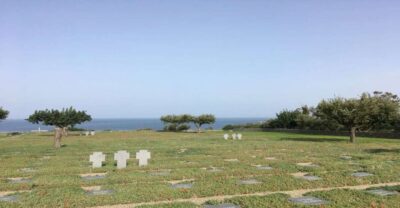
Chania Battle of Crete Private Tour: WW2 Military History
Read our review →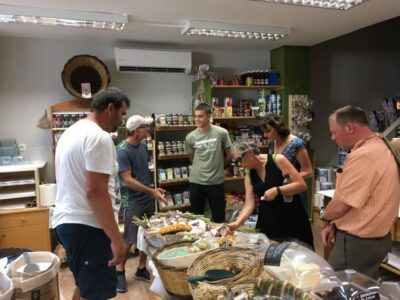
Battle of Crete and WW2 History Tour with Bunkers
Read our review →Browse the lists this tour appears in