
Reviewed · GORGE HIKES
Pottery Village of Margarites – The monastery of Arkadi & The Gorge of Patsos
This experience is interesting because it links three very different sides of Crete, craft, faith, and walking nature paths, all in one smooth day. I like how you get hands-on with local skill when you meet Yorgos, a potter in Margarites, and watch hand-thrown pottery take shape right before you. It also runs with chauffeur-driven logistics, so you spend less energy on driving and more on looking around.
My second favorite part is the way the day feeds you without fuss. You’ll get a traditional tavern lunch with a vegetarian option, and the tour includes raki and relaxed, friendly conversation along the way. That pacing matters, because it keeps the countryside stops from feeling rushed or snack-only.
The main thing to consider is the gorge walking. It is short, but it is still a real hike, and you may only go partway depending on weather and your comfort level at that point in the route.
Key points I’d mark on your map
- Meet potter Yorgos in Margarites and see pottery made by hand, not just displayed.
- Arkadi Monastery focus is outside-only guidance since the guide is not allowed to lead inside historical monuments.
- Patsos Gorge has protected species, with 80 flora species (4 protected), 24 fauna species (11 protected), and 16 bird species (8 protected).
- Small group size, max 6 travelers, so questions and pacing feel personal.
- Admission fees and lunch are included, plus raki and good-natured stops.
- You can choose your hike length, typically around 20 to 30 minutes onward, with options to turn back sooner if needed.
Margarites, Arkadi, and Patsos in one calm 6-hour run
If you are basing yourself in Rethymno and want a countryside day that feels organized, this works well. Hotel pickup and drop-off are limited to the Rethymno district, and you start at 9:00 am, then spend about six hours total. The biggest convenience is that you do not drive, a chauffeur handles the route in an air-conditioned car or mini bus.
This is also a good size for a day like this. The tour caps at a maximum of six travelers, which changes the feel immediately. You get a more conversational guide dynamic, and you are less likely to feel like you are standing in a long line every time you turn a corner.
The day is built around three stops with different flavors, and that variety is the point. You start in a working pottery village, move to a fortified monastery tied to a historic tragedy, and end in Patsos Gorge where you walk near running water and see a cave church. It is not museum-only sightseeing. It is more like you are traveling through Crete’s daily skills, its beliefs, and its nature rules.
More Cretan gorge hikes:
- Rethymno: Preveli Beach Damnoni Beach Kourtaliotiko Day Trip
★ 4.3 · 929 reviews - From Rethymno/Chania: Imbros Gorge Hike
★ 4.4 · 353 reviews - From Rethymno: Kourtaliotiko, Preveli Palm Beach, & Damnoni
★ 4.8 · 203 reviews
Margarites village pottery: colors, narrow streets, and Yorgos’s hands
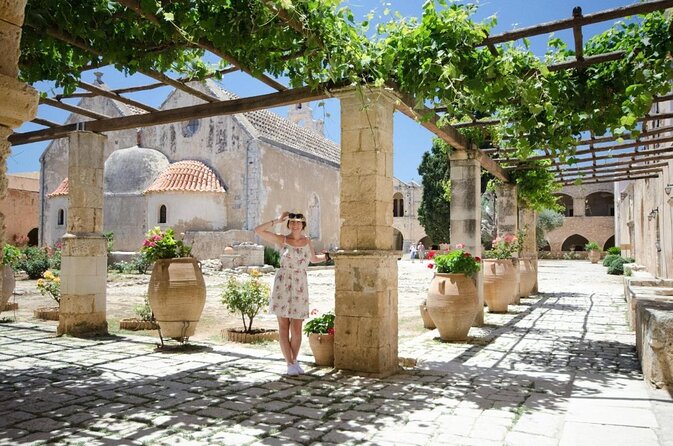
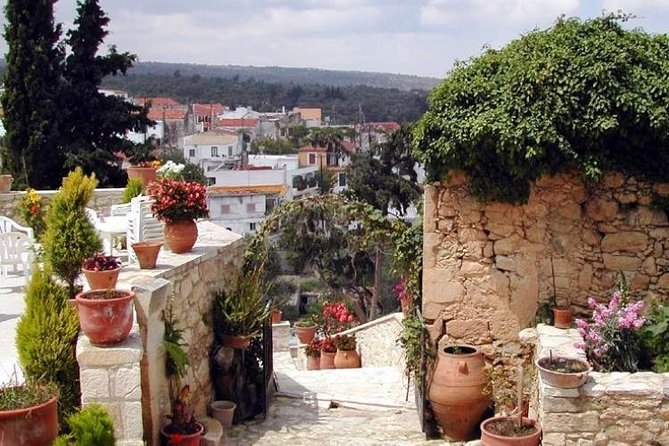
Margarites is one of those places that feels easy to miss if you are driving around fast. It is described as a well-hidden village, and the reason shows up the moment you arrive. The streets are narrow and winding, and the architecture makes the village feel compact, like you are stepping into a small world.
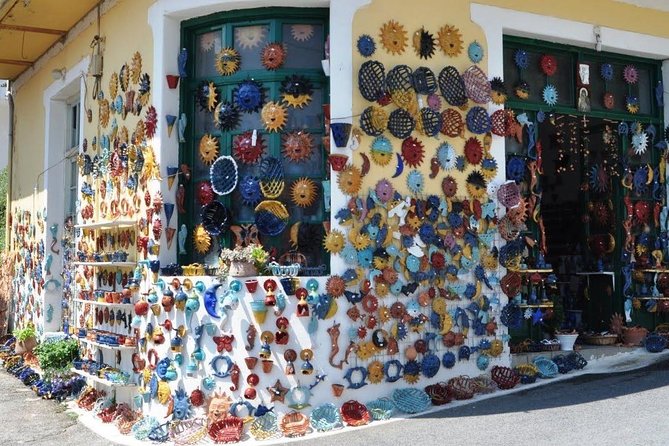
Pottery is the village’s thread. The tradition has been important for generations, and many locals still keep it alive today, not as a static craft display but as modern art. What I like about this stop is that it is not just a “look and leave” experience. You meet Yorgos, a local potter friend, and you see how pots are hand thrown, which is a skill that looks simple only after you try it.
The demonstration matters because you learn what you are looking at later. When you watch someone shape clay by hand, you start noticing details you would otherwise ignore, the steadiness of the motion, the rhythm, and the way the form emerges. You also get a sense of why this kind of craft survives in a place like Margarites. It fits the village scale, it fits the community, and it keeps people connected to a long practice.
After the demonstration, you get time to wander the village at your own pace. The streets are a big part of the experience, plus there are colors everywhere from pottery and local displays. It is also the kind of stop where a slow walk helps. If you rush, you miss the small corners where the craft shows up in everyday sightlines.
To keep things grounded, the tour builds in a traditional coffee stop at a small kafeneio. It is not a generic pause. It is where you can sit, watch life move, and reset your energy before the monastery segment.
Practical tip: if you want photos, do it during the wandering time. The demonstration is the main learning moment, but the village streets are where your camera will feel busiest.
Arkadi Monastery: fortified walls, Venetian-era design, and a 1866 tragedy
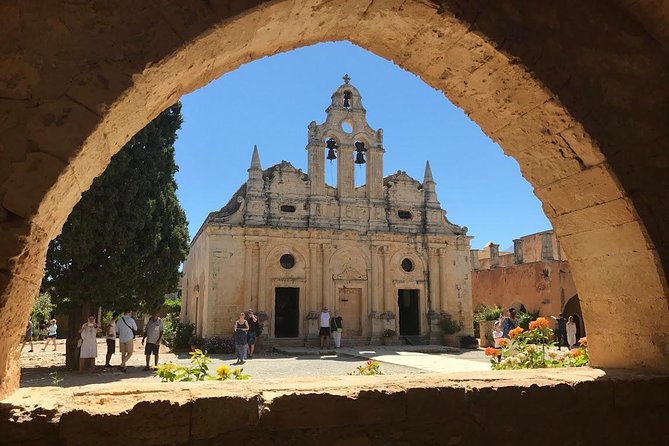
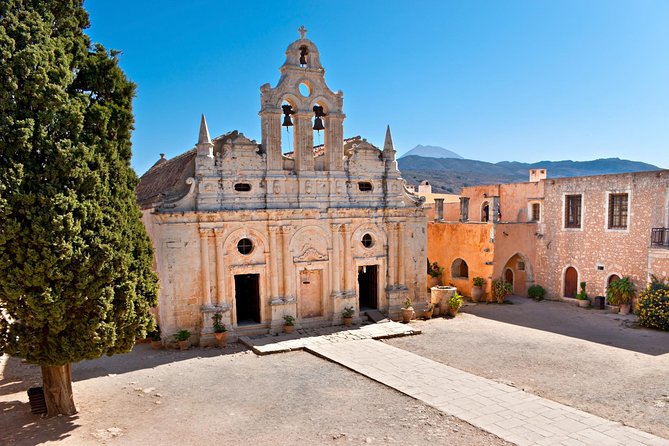
From pottery craft to monastery history, the contrast is sharp, and that is why it works. After a short drive, you reach Arkadi Monastery. It is one of Crete’s best-known monasteries, largely because of the Holocaust of 1866. Even if you only know the name, standing there gives weight to the story.
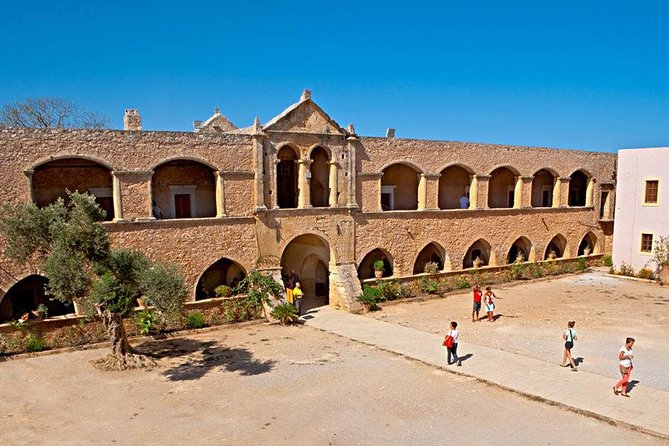
Arkadi is also special for its architecture. It is described as a large fortified complex, built during the end of the Venetian rule. That wording matters because it hints at why the building feels more like a stronghold than a quiet religious retreat. Fortifications change how light hits the stone, how spaces feel, and how the complex reads visually.
Here is a key detail that affects your expectations. The guide can escort you to explore the monument, but the guide will not enter with you in the monastery. Since the guides are not official, it is forbidden to have a tour inside historical monuments. That means your time is best spent using the guide’s explanation up front, then exploring the interior areas at your own pace.
For many people, that ends up being fine. You still get the educational context about Cretan culture and religious customs. And you do not have to worry about being rushed through with a strict script. You can stop where something catches your eye, then return to the guide for questions before moving on.
The tour includes the monastery admission fee, so you are not dealing with cash or ticket lines. In practice, that keeps the stop feeling calm and focused on the place itself.
Practical tip: plan on walking on uneven surfaces and stone steps around the complex. Bring shoes you trust. Also, if the day is bright, consider sunglasses, because stone courtyards and open areas can be glare-heavy.
Patsos Gorge walk to St. Anthony, plus protected species and running water
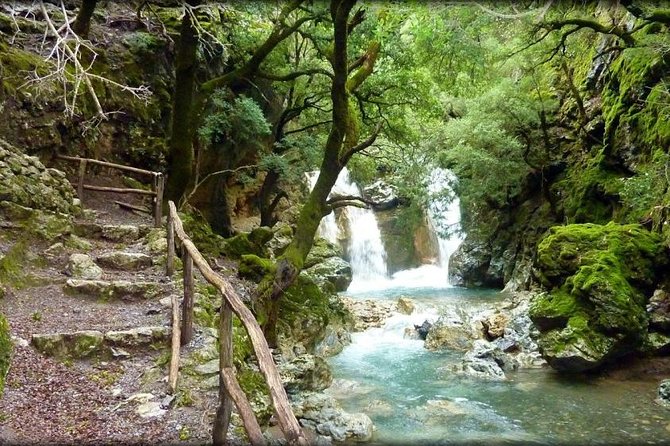
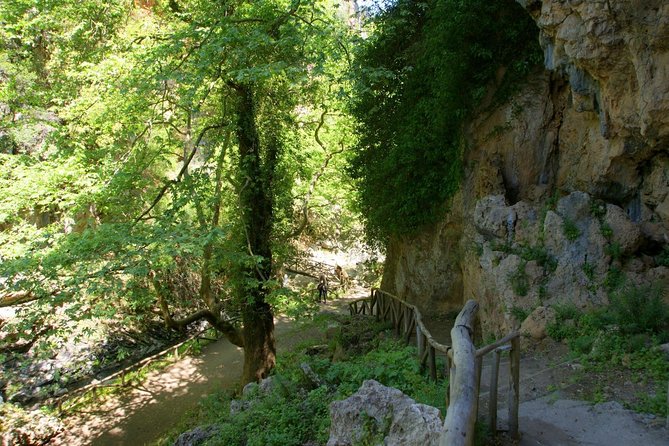
The final stop is Patsos Gorge, also called the Gorge of Patsos. It is described as small but magnificent, and that size is part of its charm. You are not committing to a long trek all day. Instead, you get a gorge experience that stays manageable.
The gorge starts at Ano Assites, and the tour frames it as nature with a protected ecosystem. The tour information highlights rare species of flora and fauna protected by European legislation. You are told the numbers, which I appreciate because it turns the walk into something more than a scenery check. You will hear that there are 80 flora species, with 4 protected, plus 24 fauna species with 11 protected, and 16 bird species with 8 protected.
During the walk, you also get a small picnic at the gorge facilities. That matters because it gives you a real break, not just standing around. You are watching a spring of running water near the river, which helps the gorge feel alive even on a warm day.
One of the most memorable features is the cavernous church of St. Anthony in the rocky walls. It is a former temple of Hermes, and that mix of layers is part of what makes the site intriguing. It is easy to think of churches only as religious buildings, but here you see the idea of reuse and continuity in rock and worship spaces.
About the hiking itself: usually the route includes a walk of around half an hour, up to a point where the gorge becomes difficult. The guidance says you may hike about 20 to 30 minutes, and then you decide whether to continue a little more based on weather and physical condition. That flexibility is a big deal. You get a plan, but not a forced finish line.
Comfort level also depends on your pace. The experience is described as adaptable, so you can enjoy the easier portion that reaches the St. Anthony cave area, or you can go farther if you feel good. Either way, you end the day feeling like you actually walked something, not just looked at photos from a distance.
Practical tip: this is where good shoes pay off. Paths in gorges can be uneven and slippery after wet weather. Even if the tour says the hike is short, bring footwear you can trust for quick turns and rocky ground.
Same stretch of Crete, a different kind of day:
- Crete: Day Trip to Agios Nikolaos and Spinalonga Island
★ 4.6 · 4,416 reviews - Agios Nikolaos: Boat Trip to Spinalonga with Swim Stop
★ 4.4 · 3,031 reviews - Crete: Knossos Palace Entry Ticket with Optional Audio Guide
★ 3.9 · 2,251 reviews - From Chania: Day Trip to Elafonisi Island Pink Sand Beach
★ 4.5 · 2,014 reviews
Lunch, raki, and the “we’re not rushing you” feel
After pottery, then monastery, the day could have felt like three separate boxes ticked. Instead, it keeps landing back on food and human pace, which is why the tone stays friendly.
Lunch is included, and there is a vegetarian option. The meal is described as a traditional countryside tavern lunch. I love that it is not a bland boxed lunch. It is the kind of Crete meal that makes the day feel like a real local interlude.
In particular, one of the strongest notes from people who enjoyed the tour is the tavern food. The lunch has been described with specific items like meatballs in fragrant tomato sauce, goat and local cheese pastry with mint, and a sweet finish of honey. It is the sort of meal that makes the drive time feel worth it, because you are eating at the end of your effort, not before you feel hungry.
Raki is also included. It is not just a sip for formality. It shows up as part of the group mood, a chance to relax after walking and seeing older sites. And yes, the tour aims for good conversation, not silence on a bus.
I also appreciate that the coffee stop in Margarites is built into the rhythm. You are not stuck waiting until the middle of the day to feel human again.
Price and what you really get for $357.45 per person
At $357.45 per person, you should judge this tour on structure, not just headline cost. For a day that includes hotel pickup and drop-off in the Rethymno district, air-conditioned transport, a guide, multiple site admissions, lunch, and raki, the value is easier to see.
Most of your money is doing three jobs:
- Covering logistics (you do not drive, and pickup handles the start and end).
- Covering entries (the monastery entrance is included).
- Covering food (lunch, plus the coffee stop, plus raki).
That combination reduces “hidden trip costs.” If you tried to plan it yourself, you would spend your time figuring out transport between Margarites, Arkadi, and Patsos Gorge, then separately pay for each entry and a lunch stop. Here, it is already packaged.
It also helps that the tour is a private tour for just you and your party while still using the small-group maximum (up to six travelers). That is a nice balance for people who want personal attention without paying for an ultra-luxury feel.
A realistic consideration is that you are limited to the Rethymno district for pickup. If you are staying elsewhere, this tour might not match your starting point. The good news is that the meeting point is clearly identified in Rethymno, and pickup timing depends on your hotel.
Who should book this pottery, monastery, and gorge day
This is a strong match if you want a day that mixes culture and walking without turning into a full hike-and-museum marathon. The route is varied, and the day is paced so you can enjoy each stop, not just survive it.
You’ll likely enjoy this tour if:
- You care about craft and like seeing skills demonstrated, not just products displayed.
- You want to understand Cretan religious customs in context, not as a standalone lecture.
- You enjoy short, manageable nature walks with a clear destination like the St. Anthony cave church.
You might reconsider if you have very limited mobility. The itinerary includes a gorge walk and time in and around monastery spaces. It is described as requiring moderate physical fitness, which usually means you can handle walking on uneven ground and stairs for short stretches.
Should you book it
If you are based in Rethymno and you want an organized, small-group countryside day that hits pottery, Arkadi Monastery, and Patsos Gorge with included admissions and a real meal, I would book this. The best reason is simple: it saves you driving stress while still giving you authentic time at each stop, including Yorgos’s hand-thrown pottery and the St. Anthony cave in the gorge.
My only “wait” moment is the walking portion. If you are nervous about gorge ground, you can still keep the hike within the easier segment and turn back around the point where the route becomes harder. If you know you can handle short hikes and stone steps, this day feels like a solid value for your time in Crete.
FAQ
Is pickup available from hotels in all areas of Crete?
Pickup is only offered in the Rethymno district. The tour meets at Eleftheríou Venizélou 39, Rethymno.
What time does the tour start?
The start time is 9:00 am.
How long does the experience last?
The duration is about 6 hours.
How many people are in the group?
The tour has a maximum of 6 travelers.
What languages are the guides?
The guide is available in English or French.
Is lunch included, and is there a vegetarian option?
Yes. Lunch is included and a vegetarian option is available.
Are entrance fees included?
Yes. Admission fees are included, including entrance to the Monastery of Arkadi.
How much hiking is involved in Patsos Gorge?
The gorge walk is typically about half an hour, usually up to a point where the gorge becomes difficult. The hike often includes about 20 to 30 minutes before you decide whether to go a bit farther based on weather and your physical condition. A picnic is also included at the gorge facilities.
If the weather is poor, does the tour run anyway?
This experience requires good weather. If it is canceled due to poor weather, you will be offered a different date or a full refund.
Does the guide enter with you inside the Monastery of Arkadi?
No. The guide will escort you to explore the monument, but it is forbidden for the guide to enter with you inside the historical monuments.
Fresh options around Crete
- Private tasting of 6 cretan wines in Fres village, Chania★ 5.0 · 4 reviews
- Off-road Buggy Safari in Crete with a Guide★ 4.5 · 16 reviews
- Semi Private Wine Tour of 2 wineries with Transfer and Lunch★ 4.0 · 15 reviews
- Wine Tasting in Rethymno★ 5.0 · 21 reviews
- Cretan Delights – Wine, Olive Oil & Cooking Workshop from Chania★ 5.0 · 25 reviews
- LUXURY PRIVATE Wine Tasting in CRETE (also for CRUISE SHIPS)★ 5.0 · 7 reviews
- Heraklion Private Half-Day Wine Tasting Tour in Lyrarakis Winery★ 5.0 · 7 reviews
- 2-Hour Wine Tasting & Food pairing in Rethymno, Crete, Greece★ 5.0 · 11 reviews
Gorge Hikes, compared.
Preveli Beach Damnoni Beach Kourtaliotiko Day Trip
Read our review →
Preveli By Boat, Damnoni & Kourtaliotiko Springs
Read our review →
Sarakina Gorge, Forests, and South Coast Safari
Read our review →
Richtis Waterfall Full-Day Tour with Olive Tasting
Read our review →
Browse the lists this tour appears in