
Reviewed · CRETE
Traditional Villages of Kritsa and Kroustas
Crete is full of great beaches, but this half-day trip takes you inland, to villages where daily life still feels close to the old ways. You start in Kritsa for lace, crafts, and coffee stops, then head to Kroustas for village food, wine, and a calmer pace.
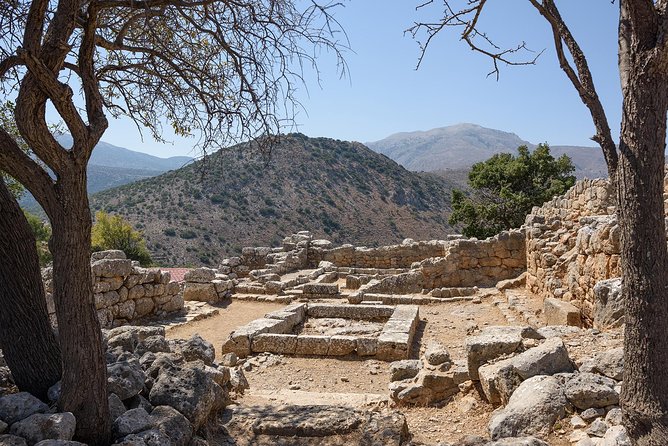
I especially like how the route mixes handwork and street life with real monuments. You get wall paintings inside Panagias Keras Church and a practical history hit at Archaia Poli tis Lato, the Doric city-state ruins perched with wide views.
One thing to consider is that travel time eats into the day. The transfer to and from the sites is about 1 to 1.5 hours each way depending on traffic, so you will want comfortable shoes and a flexible mindset.
Key Highlights You Should Know
- Small-group size (maximum 8 travelers) means a calmer visit and less waiting around
- Panagias Keras Church wall paintings in Byzantine styles, preserved and worth the short stop
- Ancient Lato ruins with big views over Mirambello Bay from a protected, saddle-like setting
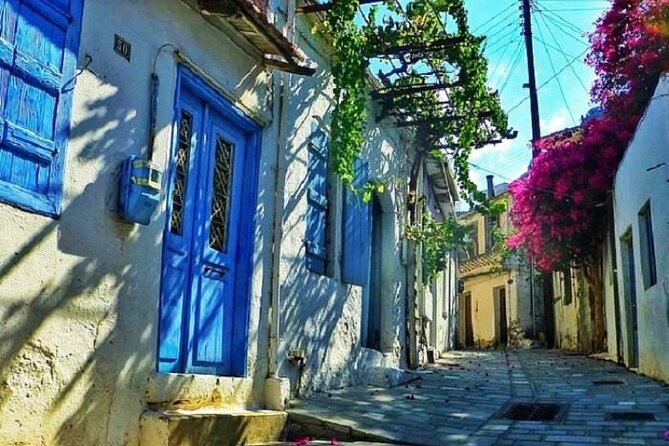
- Kritsa’s lived-in charm with narrow lanes, textile shops, coffee spots, and folklore collections
- Kroustas for local tastes and wine with cheese pies, goat dishes, and grapes like Liatiko and Mandilari
Why Kritsa and Kroustas Feel More Real Than a Checklist
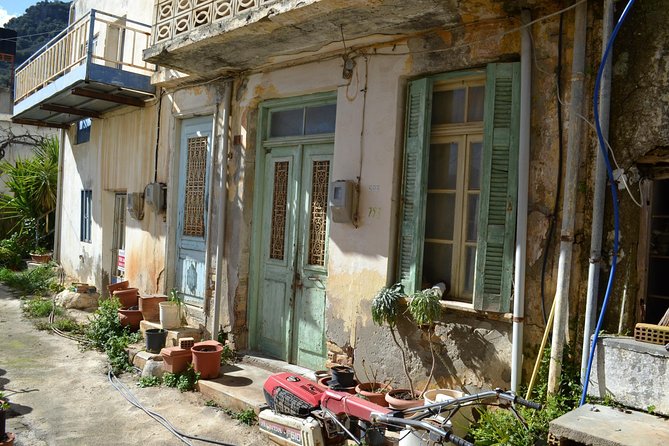
This tour works when you want real village texture, not just photos and a quick walk-through. Kritsa and Kroustas are small places where people still keep traditions alive, especially around crafts, food, and the rhythms of daily life. That gives you a better sense of how Crete sounds and looks when it is not trying to be a postcard.
What I like most is the balance. You do not choose between archaeology and village wandering, you get both. Panagias Keras Church brings you inside a key monument, then you shift gears to Archaia Poli tis Lato for an ancient site that also rewards you with views. After that, you spend enough time in Kritsa and Kroustas to actually browse, snack, and notice details.
The second thing I like is the small-group feel. When there are only up to 8 people, the day tends to feel less rushed. One review specifically called out a mini van setup with just a few couples and a friendly driver, and that matches what this itinerary is designed to do, keep the day relaxed.
More of Crete worth an open tab:
- Crete: Day Trip to Agios Nikolaos and Spinalonga Island
★ 4.6 · 4,416 reviews - Agios Nikolaos: Boat Trip to Spinalonga with Swim Stop
★ 4.4 · 3,031 reviews - Crete: Knossos Palace Entry Ticket with Optional Audio Guide
★ 3.9 · 2,251 reviews
Price and Logistics, How It Adds Up (and What It Costs Extra)
The price is $69.46 per person for a roughly 6-hour tour. For that, you do get pickup offered and bottled water plus soda/pop included. That is not just a nice touch on a warm day, it also keeps you from spending time hunting for drinks while you are moving between stops.
There are also a couple of things that can add small costs. Entrance fees are not included, and the notes say:
- Panagias Keras Church: 3 euro
- Archaia Poli tis Lato: 3 euro
At the same time, the stop description lists Panagias Keras Church as free and Kritsa and Kroustas as free. Since the practical fee note is explicit, I would plan for the 3 euro reality at Panagias Kera, just to avoid surprises.
Timing matters here. The itinerary includes:
- 30 minutes at Panagias Keras Church
- 50 minutes at Archaia Poli tis Lato
- 1 hour 30 minutes in Kritsa
- 1 hour 40 minutes in Kroustas
Then add transfer time of about 1 to 1.5 hours each way. Translation: you will spend your time thoughtfully, but you will not get endless wandering. This is a half-day style tour with a full day feel, in a good way.
If you are watching value, this is the math: you pay for transport, driver help, and the structure that links two villages plus two major sights. If you were doing it by bus and taxi on your own, you might spend a similar amount or more, and you still would not get the same tight routing.
Where You Start: Andrea Papandreou 36 and Pickup Details
The meeting point is Andrea Papandreou 36, Schisma Elountas 720 53, Greece, and the tour ends back there. Pickup is offered, so you might not have to drive yourself.
In practice, a small group setup makes pickup and drop-off feel smoother. You are not stuck in a big vehicle with lots of stops. Expect a direct day plan, because the route has fixed timing at each site.
You also get a mobile ticket, which is handy. No printing, no extra hassle once you are on your way.
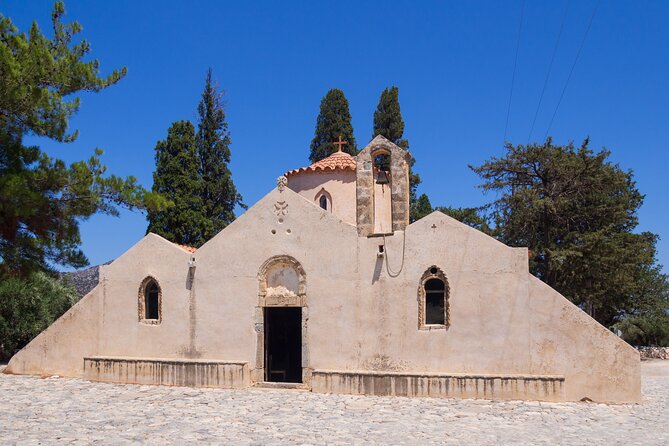
Stop 1: Panagias Keras Church, Byzantine Paintings in a Short Visit
Panagias Keras Church is about 500 meters south of Kritsa, so it is close enough to work as a first stop. This church stands out for how much painting coverage it has. It is described as:
- three-aisled
- barrel-vaulted
- with a dome on the nave
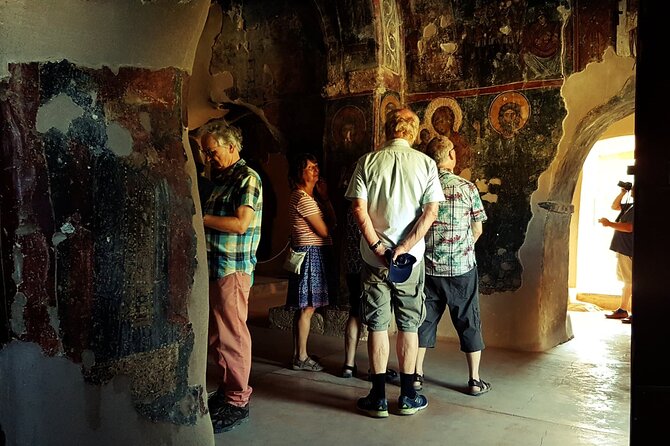
The real highlight is the extensive and well-preserved wall painting decoration from various periods of Byzantine art. In plain terms, you are looking at layered artistic eras rather than one single time period.
Time-wise, you only get about 30 minutes. That is enough to take in the big details and catch the overall style. If you love art and want to linger, you might wish the stop ran longer, but the rest of the day needs those minutes too.
Cost-wise, plan for entrance to potentially be paid. The fee note says 3 euro for Panagias Keras is not included, even though the stop section also mentions free admission. I would bring a little cash just in case.
Same stretch of Crete, a different kind of day:
- From Chania: Day Trip to Elafonisi Island Pink Sand Beach
★ 4.5 · 2,014 reviews - Crete: Rethimno, Chania, and Kournas Lake Day Trip
★ 4.4 · 1,694 reviews - From Rethymno: Half-Day Quad Bike Safari
★ 4.8 · 1,444 reviews - Knossos: Knossos Palace Skip-the-Line Guided Walking Tour
★ 4.8 · 1,380 reviews
Stop 2: Archaia Poli Tis Lato, Doric City-State Ruins Above Mirambello Bay
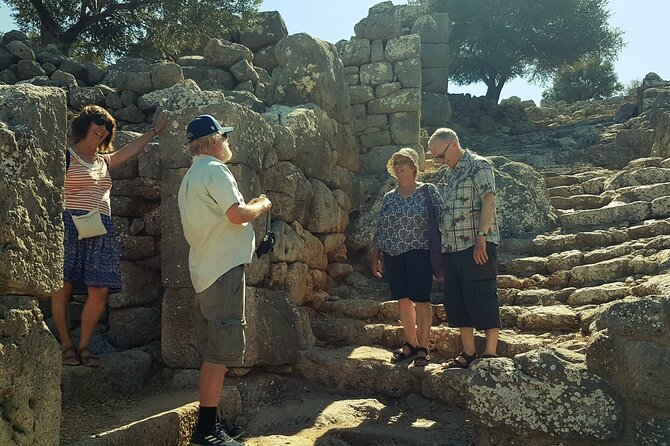
Next you head to Archaia Poli Tis Lato, the ruins of Lato, one of the important Doric city-states in Crete. The setting is part of the payoff. The site is built on a saddle between two hills, so you get both protection and a wide view.
The view factor is not a vague “pretty scenery” claim. You are told to look over a large area of Mirambello Bay. That kind of outlook helps you understand why ancient settlements chose high, defensible spots.
You also get solid history points to connect the dots:
- Lato was named after Leto (the Doric form is Leto, Lato is the city name)
- the main goddess worshipped there was Eileithyia, linked to childbirth and shown on the city’s coins
- Nearchos, admiral of Alexander the Great, is connected as a birthplace
- the harbour was Lato pros Kamara (modern Agios Nikolaos)
- by the mid-2nd century A.D., the administrative centre moved there, and Lato was later abandoned
You have about 50 minutes here. That is a good amount of time to walk the main area, get your bearings, and still make it into Kritsa with energy.
Entrance at Lato is not included, and the fee note says 3 euro.
Stop 3: Kritsa Village, Lace, Textiles, Coffee Shops, and Lanes That Go On
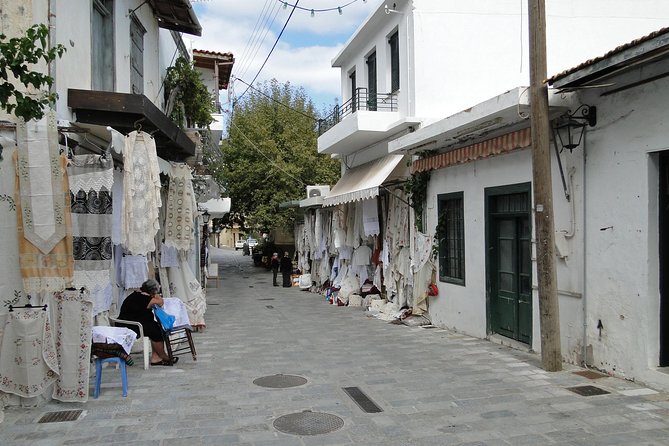
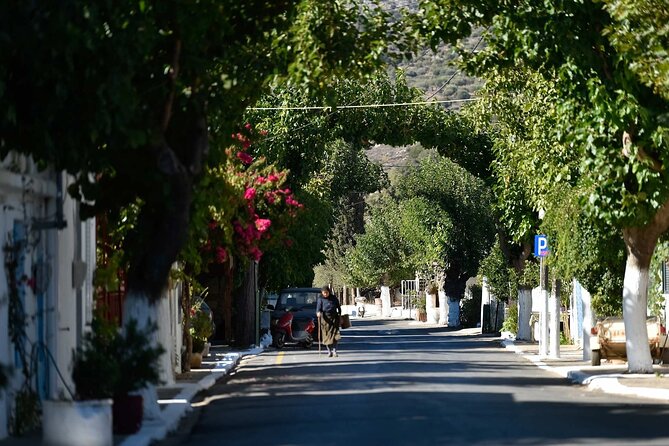
Kritsa is the village stop that makes the whole day feel grounded. It is known for traditional lace making and handicrafts, and it shows in the way the streets are arranged, with small shops and textured everyday life.
Plan to spend about 1 hour 30 minutes here. That is long enough to:
- browse textile and craft shops
- pop into traditional coffee shops
- spot folklore collections and Byzantine temple elements
Kritsa also gets described as having narrow streets with blooming yards and old buildings, giving it the feel of an open-air museum of sorts, but still lived-in.
One practical detail that matters: you may find it easier to park than you expect, and one review called out free parking and clean, free toilets. Even if those specifics vary a bit by season, it is still good news for your comfort.
What to keep in mind: the village can be a mix of well-kept lanes and older, abandoned structures. That is not a reason to skip it. It is just a reminder that you are seeing real communities, not only preserved streets for visitors.
Stop 4: Kroustas, Cheese Pies, Goat, Honey, and Wine from Local Grapes
After Kritsa, the tour shifts from lace and crafts to what you can taste. Kroustas is a smaller village, around 500 residents, with stone houses and narrow streets, plus countryside around it.
You get about 1 hour 40 minutes here, and it is designed for food browsing, a relaxed walk, and time at tavernas. The big “what to try” list is exactly the kind of thing that makes a village stop memorable:
- myzithropites, special cheese pies
- ftazymo bread
- aiga vrasti, boiled goat
Beekeeping is noted as well developed in this area, so honey and honey-based flavors are something you might spot on menus or in local food culture.
Kroustas is also famous for wine. The grapes mentioned include:
- Liatiko
- Mandilari
You might also see village classics like:
- skioufihta, a local pasta dish
- kalitsounia, a sweet or savory pastry
Lunch is not included, so you decide what you want to eat and how big you want your meal to be. Since drinks like water and soda are included, you can focus your budget on the food that matters most.
There is one more subtle upside here. In a small village, you often get a more personal version of hospitality. One review praised Greek hospitality and a friendly driver who explained things along the route, and that vibe usually matches the kind of slow, social meal you can have in Kroustas.
What This Tour Feels Like, the Small-Group Advantage
This is not the kind of day where you fight crowds. With a maximum of 8 travelers, you are more likely to keep your pace without the constant “everyone back on time” energy that comes with larger groups.
The reviews point to that too, with mentions of a mini van and only a few couples. The same feedback also highlights tailoring depending on your interests. Even if you do not fully control the route, that kind of flexibility can mean you spend an extra minute in a shop you care about, or you get clearer explanations at a stop you find more interesting.
Another strong theme is the driver. One review names Christos and credits him with explaining things on the way and bringing a friendly, relaxed feel. While you cannot count on the same person every time, the fact that the experience is consistently tied to good driving and explanation is worth weighing in your decision.
Food and Wine Tips So You Don’t Second-Guess Yourself
Because lunch is on your own in Kroustas, I suggest you treat this stop like a mini tasting menu. You do not need a huge meal plan. Instead, pick one savory specialty and one sweet option, then let the rest follow.
Here are easy ordering ideas based on what is specifically listed:
- Choose myzithropites if you want something creamy and comforting.
- Choose skioufihta if you want a local pasta-style dish.
- Choose kalitsounia if you want a sweet or savory pastry and something easy to share.
- If you see aiga vrasti and you are curious, it is listed as boiled goat, so check if it fits your appetite today.
For wine, ask what is local to the area. Liatiko and Mandilari are the grapes named, so you have a starting point for what to look for on menus or in tastings.
One practical move: use the included bottled water and soda/pop to cover your drinks, then spend your money where it counts, on the food and wine.
Getting the Most Out of Each Stop Without Rushing
This itinerary is timed tightly, so how you move matters.
At Panagias Keras Church, focus on the wall paintings first. You will get more from 30 minutes if you walk in with a simple goal: look for the range of painting styles and how the interior is structured.
At Archaia Poli Tis Lato, prioritize the viewpoint. That setting on a saddle between hills is one of the defining things about the site, so take a moment for it before you start walking.
In Kritsa, slow down. You are not just passing through. The value is in the texture, lace and handicrafts, narrow streets, textile shops, and the small everyday stops like coffee shops.
In Kroustas, let the village set your pace. You have the most time here of the walking stops, 1 hour 40 minutes. Use it for both food and a relaxed stroll.
If you want one simple strategy, it is this: plan to do one longer activity in each village, shopping and coffee in Kritsa, then eating and a wine decision in Kroustas.
Practical Stuff to Plan For
Here is what the tour data tells you to prepare for.
- The experience requires good weather. If it is canceled due to poor weather, you will be offered a different date or a full refund.
- Service animals are allowed.
- Most travelers can participate. Narrow streets and walking between stops are part of village exploring, so wear shoes you can trust.
- Transfers are about 1 to 1.5 hours each way depending on traffic, so bring patience and a light layer if weather changes.
Also, remember that entrance fees for Panagias Keras and Lato are not included. Even if Kritsa and Kroustas are free, those two fees are the main extra costs.
Should You Book Traditional Villages of Kritsa and Kroustas?
Book it if you want a true inland taste of Crete in one day. This tour hits the sweet spot for people who like:
- village streets, local crafts, and traditional shops
- a short, meaningful church visit with Byzantine wall paintings
- an ancient site stop where views actually help you understand the place
- village food and wine, with lunch decisions made in Kroustas
Skip it or swap expectations if you need a longer time at each major monument. The time at each site is limited, so you are doing a curated tour day, not an all-day archaeology session or a deep artisan workshop.
If you are traveling with a small group, this format is especially appealing. The maximum group size of 8 helps keep the day relaxed, and the positive feedback around friendly drivers and a personalized feel is exactly what you want from a half-day Crete experience.
FAQ
How long is the Traditional Villages of Kritsa and Kroustas tour?
The tour lasts about 6 hours.
Where does the tour start, and is pickup offered?
It starts at Andrea Papandreou 36, Schisma Elountas 720 53, Greece. Pickup is offered, and the tour ends back at the meeting point.
What is the maximum group size?
The tour has a maximum of 8 travelers.
What food and drinks are included?
Bottled water and soda/pop are included. Lunch in Kroustas is not included.
Are there entrance fees for the stops?
Yes. Panagias Keras Church has a 3 euro entrance fee listed as not included, and Archaia Poli tis Lato has a 3 euro entrance fee listed as not included. Kritsa and Kroustas are marked as free.
Can I cancel for a full refund?
Yes. You can cancel for free up to 24 hours in advance for a full refund.
What happens if the weather is poor?
The tour requires good weather. If it is canceled due to poor weather, you will be offered a different date or a full refund.
Fresh options around Crete
- Off-road Buggy Safari in Crete with a Guide★ 4.5 · 16 reviews
- Semi Private Wine Tour of 2 wineries with Transfer and Lunch★ 4.0 · 15 reviews
- Private tasting of 6 cretan wines in Fres village, Chania★ 5.0 · 4 reviews
- Wine Tasting in Rethymno★ 5.0 · 21 reviews
- Cretan Delights – Wine, Olive Oil & Cooking Workshop from Chania★ 5.0 · 25 reviews
- LUXURY PRIVATE Wine Tasting in CRETE (also for CRUISE SHIPS)★ 5.0 · 7 reviews
- Heraklion Private Half-Day Wine Tasting Tour in Lyrarakis Winery★ 5.0 · 7 reviews
- 2-Hour Wine Tasting & Food pairing in Rethymno, Crete, Greece★ 5.0 · 11 reviews