
Reviewed · COOKING CLASSES
Heraklion: Cretan private cooking lesson with lunch in Arolithos
If you want Crete that feels personal, this half-day plan around Arolithos Traditional Cretan Village is a smart choice. You start with a walk through the little lanes and an on-site museum, then you move into the taverna to cook real Cretan recipes with your guide, including Alexandria (the kind of guide who makes history feel like a story, not a lecture). A small thing to consider: you will need good weather, because the experience depends on it.
What I like most is that you do not just watch. You make dishes yourself, from classics like tzatziki to Cretan cheese pies. And you eat your work with local wine and mineral water, with a view over the valley and toward Heraklion, which is exactly the kind of “slow down” moment your trip needs. One possible drawback is that it is not built around sightseeing in central Heraklion, so you will want to plan transport accordingly.
The best part for me is how the village pieces fit together: old objects and traditional homes in the morning feel connected to the food you learn next. You get a sense of how people lived, what they cooked, and why Cretan cuisine keeps showing up on health-and-food lists for a reason.
Key highlights to look forward to
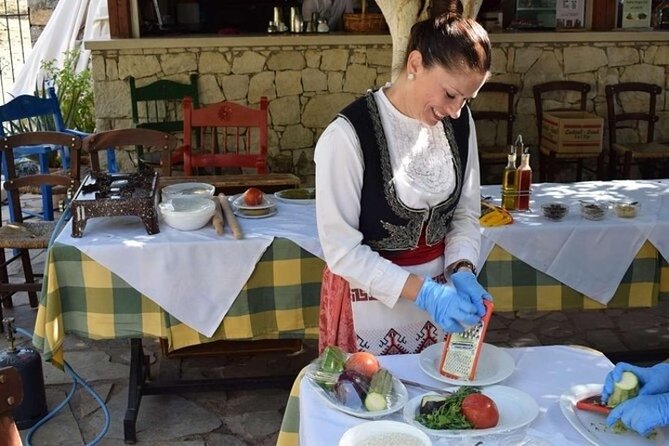
- Hands-on cooking where you prepare multiple traditional dishes and eat what you make
- Arolithos Traditional Cretan Village with a museum plus two older homes to explore
- Panoramic taverna views over the valley and Heraklion City
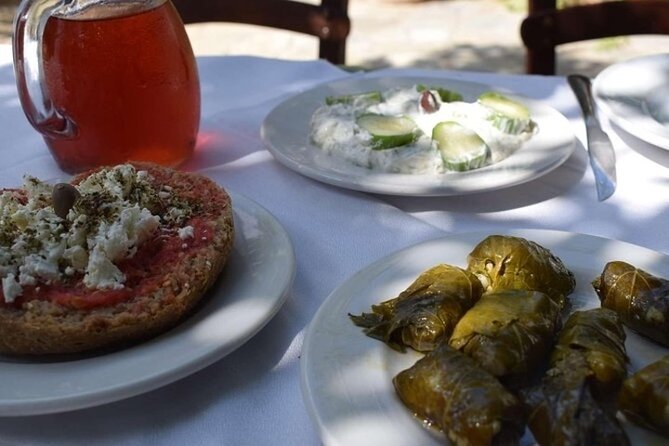
- Classic Cretan menu including stuffed vine leaves, tzatziki, ntakos, and sarikopites
- Local wine and mineral water included, so lunch feels complete
Arolithos village walk and the museum that explains daily life
The experience begins at Arolithos Traditional Cretan Village, starting at 12:30 pm. Expect about 4 hours total, and the activity ends back at the meeting point. Even if you are short on time in Heraklion, this timing works well because you get a full cultural slice without committing to an all-day trip.
Before you touch a recipe, you take a guided walk through the village. The lanes are small and calm, and the pace is relaxed enough that you can actually look at details. You are not rushing from one photo stop to the next. Instead, you are seeing how the village is arranged and what it tries to preserve.
From there, you visit the Museum of Local Art and Agricultural History. The museum includes an exhibition tied to the guides’ familial collection of older objects. That matters, because it feels less like a generic display and more like family memory turned into education. You also get to see the premises and the museum setting as part of the same story, not as separate “tour modules.”
Next, you explore two old houses, which give you a time-travel feeling. The point is not just seeing old furniture. It is understanding how traditional homes shaped daily routines, including the kind of food people could make and store, and how communal spaces connected to meals. If you like context, this stop makes the later cooking feel earned.
One practical note: the village and museum involve walking around small streets and indoors and outdoors. Wear comfortable shoes, especially if the ground is uneven.
More Cretan cooking classes in Crete:
- Chania: Authentic Cooking Class in the White Mountains
★ 4.9 · 529 reviews - The Real Cretan Cooking Experience
★ 5.0 · 528 reviews - Chania Cooking Class-The Authentic Enjoy traditional Cretan meal
★ 5.0 · 339 reviews
Inside the taverna kitchen: what you really do in the cooking lesson
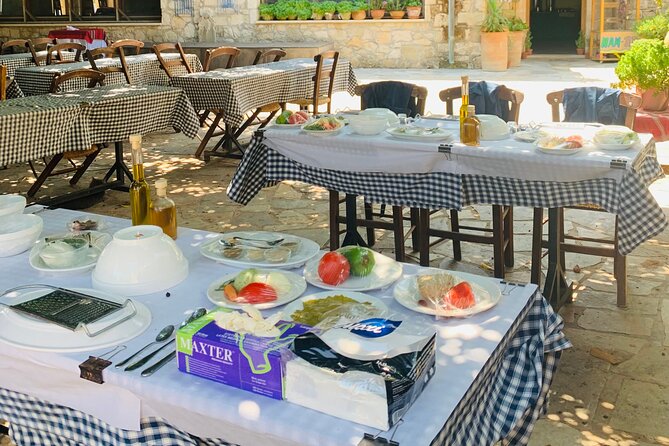
After the village walk, you head to a taverna with a panoramic view over the nearby valley and Heraklion City. That setting is more than decoration. It changes the mood of the cooking lesson. You are cooking, eating, and talking while looking out over the landscape, so it does not feel like a workshop that could happen anywhere.
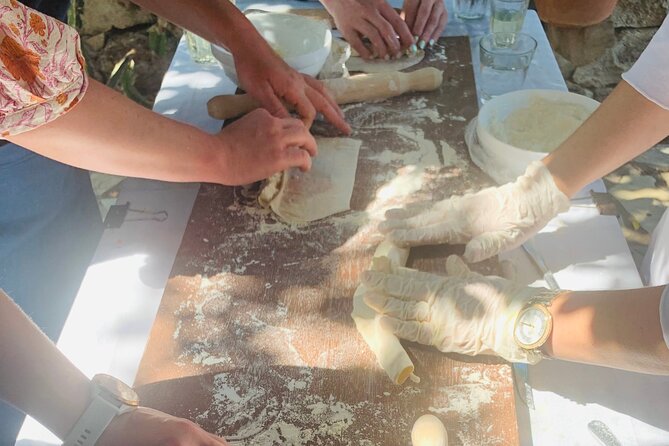
This is a private class, meaning it is only your group. That tends to create a more relaxed rhythm, especially if you want to ask questions while you work. The format is also hands-on in a direct way: you participate in making multiple dishes, rather than doing one small tasting task and calling it a day.
The menu is built around dishes that fit into a typical Cretan eating rhythm. Think yogurt-based starters, olive oil and tomato flavors, vine leaves, slow, hearty meat preparations, and desserts that lean on cheese and honey. Traditional Cretan cuisine is often described as healthy for a reason, and here you get to learn the logic behind the combinations: herbs, dairy, olive oil, vegetables, and simple but flavorful sauces.
You will also be cooking with all the materials and equipment included, so you are not showing up worried about what tools you might need. Ingredients are included too, and local wine plus mineral water are part of the meal.
If you have dietary needs or allergies, tell the team beforehand. The menu can be adapted, which is the key detail. It is far better than showing up and hoping they can make changes on the fly.
The Cretan dishes you learn, and how each one fits together
The lesson menu includes a starter lineup, mains, and dessert. Here is the practical breakdown, plus what to pay attention to while you cook.
Stuffed vine leaves with lemon juice
You start with stuffed vine leaves, sprinkled with lemon juice. Vine leaves are a classic way to package flavor and stretch ingredients, and the lemon step gives brightness right at the start. When you are rolling, slow down and make sure your filling is evenly portioned. Uneven rolls can lead to inconsistent texture.
A few more Crete days worth comparing
- Heraklion: Beginner Scuba Diving Lesson with PADI Instructor
★ 4.9 · 355 reviews - Cretan Cooking Class and Olive Oil Tasting
★ 5.0 · 178 reviews - Moires: Cooking Class and Olive Oil Tasting at a Family Farm
★ 5.0 · 93 reviews - Crete: Sightseeing Day Trip with Cooking Lesson and Lunch
★ 4.8 · 77 reviews
Tzatziki: yogurt, cucumber, garlic, olive oil, and vinegar
Next up is tzatziki, made with yogurt, cucumber, garlic, olive oil, salt, and vinegar. This one is more technique than mystery. Your goal is balance: creamy yogurt, crisp cucumber, and garlic that adds bite without overpowering. If you are used to tzatziki being bland, you will likely notice how the vinegar and olive oil pull it together.
Kritharokouloura, also known as ntakos
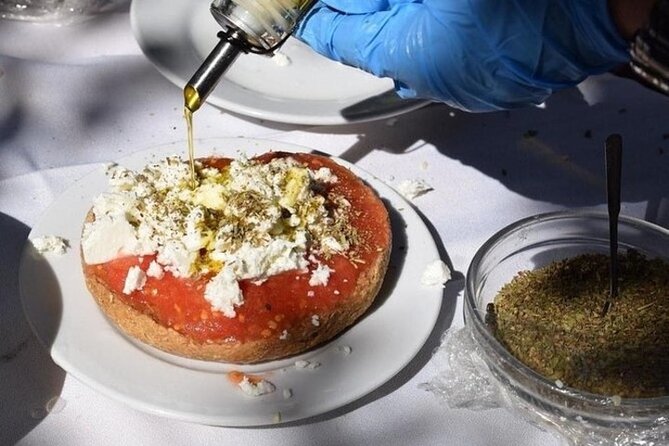
You then learn kritharokouloura-ntakos. The description here is a rusk barley base with tomato, olive oil, and feta cheese. If you like salads that are actually food, this is your kind of dish. When you assemble it, think about layering flavors and not soaking the base too early, so it still has some structure.
Pork with onions, olive oil, pepper, and wine (meze style)
For another starter, you make mbekri meze, a pork dish with onions, olive oil, pepper, and wine. Notice the theme again: olive oil for richness, onions for sweetness, pepper for warmth, and wine as the sauce backbone. This is the kind of dish where the kitchen timing matters. If the sauce reduces too far, it can get tight. If it stays too thin, you miss the coating effect.
Lamb in red sauce with green beans
Then comes the main: lamb in red sauce with green beans, described as lamb with tomato sauce, wine, and green beans. This is the hearty part of the menu, and it explains why Cretan cooking is so loved. The red sauce does not just add color. It ties together the lamb’s richness with the green beans’ freshness, so the meal feels satisfying without being heavy in a one-note way.
Sarikopites: sour cheese pies with dough, cheese, and honey
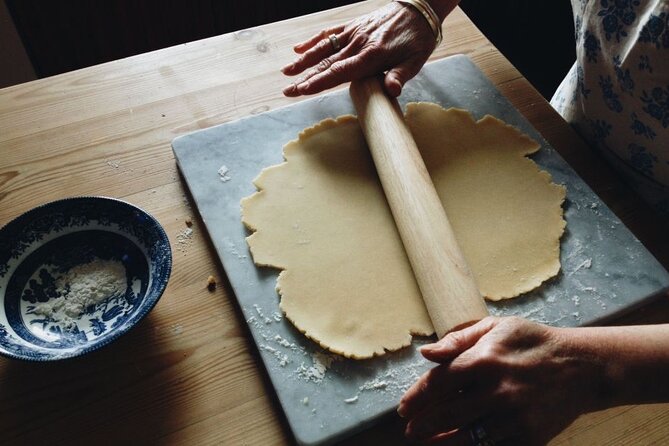
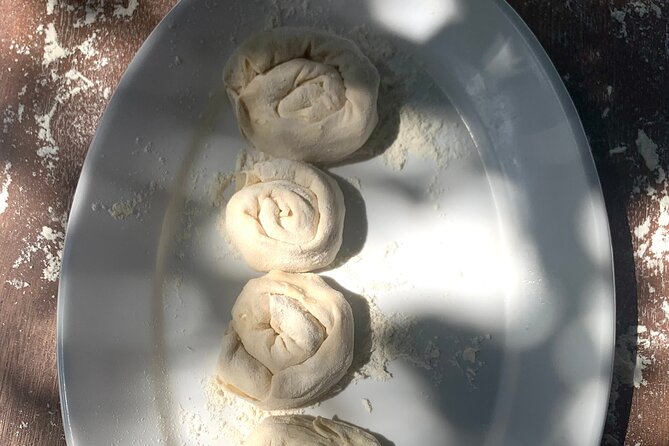
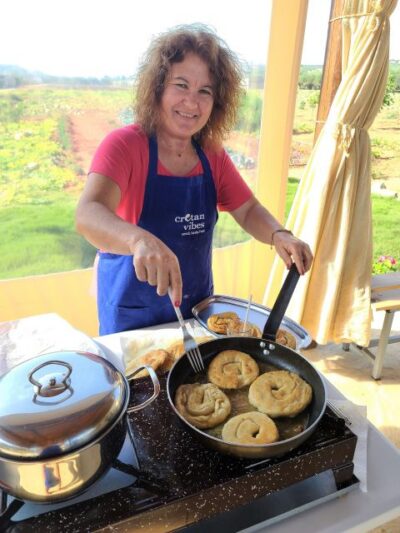
For dessert, you make sarikopites, described as sour cheese pies with dough, cheese, and honey. If you are hoping for something sweet but not overly sugary, this is the reason why. Cheese pies give you that salty-sweet contrast, and the honey finishes it.
And yes, this is the part that people genuinely get excited to repeat later. When you cook it yourself, you learn the feel of the dough and how the cheese behaves in the mix.
Eating the results: lunch, wine, and a view that makes it last
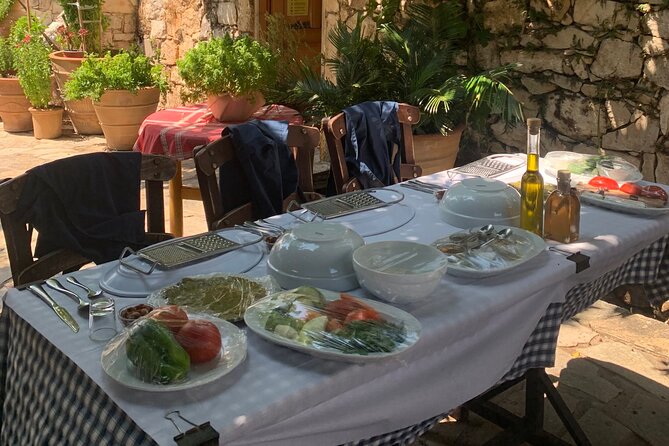
Once you finish cooking, you enjoy the dishes you prepared. Lunch includes local wine and mineral water, so you do not need to decide what to order. You also get the kind of setting that encourages lingering. The taverna has that panoramic view over the valley and Heraklion City, which turns the meal into a mini pause in your day.
One fun detail from the experience atmosphere: sometimes village dining can include nearby celebration music and dancing. You might catch that kind of local moment depending on what is happening while you are there. It is not something you can count on, but it is part of what makes Arolithos feel alive.
If you like eating outside, you are likely to enjoy the open-air feel. Even if you are not staying in the village overnight, the lunch portion gives you that “we’re part of the place for a while” experience.
Price and value: why $132.32 per person can make sense here
At $132.32 per person for around 4 hours, this tour can actually feel good value, as long as you want a hands-on cooking experience plus cultural time.
Here is what you are paying for, in plain terms:
- Private format (only your group)
- A guided tour through the village, museum, and two old houses
- A cooking lesson where you make multiple dishes
- All ingredients and equipment included
- Lunch with local wine and mineral water
- English service
What is not included is private transportation. So if you are staying in Heraklion center, you will want to have a plan for getting to Arolithos and back.
Also, this is not a “quick demo.” It is a full afternoon lesson, and you leave with the confidence to remake at least some of the dishes at home. Even if you cannot recreate the exact ingredients every time, you will understand the flavor structure, which is the real travel souvenir.
Best fit: who should book this private cooking afternoon
This is ideal if you fall into one of these groups:
- You want more than a restaurant meal and prefer learning by doing
- Your travel style includes culture plus food, not just food on its own
- You are traveling with family or friends who like to be active together
- You want a private setting where questions and pacing can match your group
It is offered in English, and confirmation arrives at booking time. Service animals are allowed, and it is near public transportation, which can help if you are not renting a car.
One more consideration: it needs good weather. If conditions are poor, the plan can be moved to a different date or you can get a refund. So if you are choosing between multiple activities on the same day, keep that flexibility in mind.
Should you book this Heraklion-area cooking lesson?
I think this is a strong book if you want a Cretan experience that ties together village life and the food people cooked day to day. The museum and old homes are not just decoration before dinner. They set up the why, and then the kitchen gives you the how.
You might skip it if:
- You only want a quick tastings-style food stop, not a multi-dish lesson
- You do not want to travel out to Arolithos and back on your schedule
- You are traveling during a stretch where weather is consistently uncertain and you hate plan changes
If you do book, go with the mindset of learning. Ask questions while you cook, taste as you go, and take notes on flavor, not just recipes.
FAQ
What is the duration of the Arolithos private cooking lesson?
It runs for about 4 hours.
What time does the tour start?
The start time is 12:30 pm.
Is this a private experience?
Yes. It is a private tour/activity, and only your group participates.
Where does the experience take place?
It takes place in Arolithos Traditional Cretan Village, near Heraklion, Crete.
What language is the tour offered in?
The experience is offered in English.
What is included in the meal and cooking materials?
All materials and equipment you need are included, and all ingredients are included as you prepare the dishes. Lunch includes local wine and mineral water.
Do you accommodate allergies or special dietary needs?
Yes. You should inform the team beforehand so they can adapt the menu to your demands.
Is transportation included?
No. Private transportation is not included.
Is there a mobile ticket?
Yes, the experience includes a mobile ticket.
What happens if the weather is bad or plans change?
The experience requires good weather. If canceled due to poor weather, you will be offered a different date or a full refund. You can also cancel for free up to 24 hours in advance for a full refund.
Fresh options around Crete
- Private tasting of 6 cretan wines in Fres village, Chania★ 5.0 · 4 reviews
- Off-road Buggy Safari in Crete with a Guide★ 4.5 · 16 reviews
- Semi Private Wine Tour of 2 wineries with Transfer and Lunch★ 4.0 · 15 reviews
- Wine Tasting in Rethymno★ 5.0 · 21 reviews
- Cretan Delights – Wine, Olive Oil & Cooking Workshop from Chania★ 5.0 · 25 reviews
- LUXURY PRIVATE Wine Tasting in CRETE (also for CRUISE SHIPS)★ 5.0 · 7 reviews
- Heraklion Private Half-Day Wine Tasting Tour in Lyrarakis Winery★ 5.0 · 7 reviews
- 2-Hour Wine Tasting & Food pairing in Rethymno, Crete, Greece★ 5.0 · 11 reviews
Cooking Classes, compared.
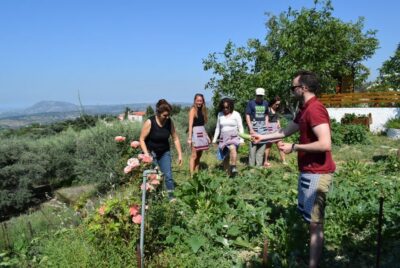
Authentic Cooking Class in the White Mountains
Read our review →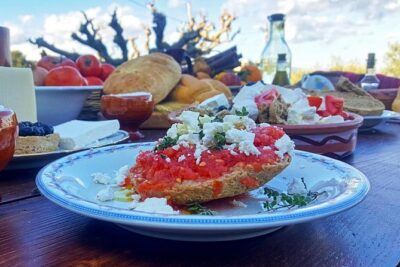
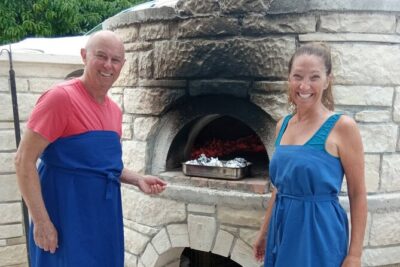
Chania Cooking Class-The Authentic Enjoy traditional Cretan meal
Read our review →
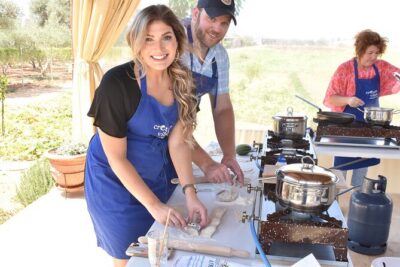
Cooking Class and Olive Oil Tasting at a Family Farm
Read our review →
Sightseeing Day Trip with Cooking Lesson and Lunch
Read our review →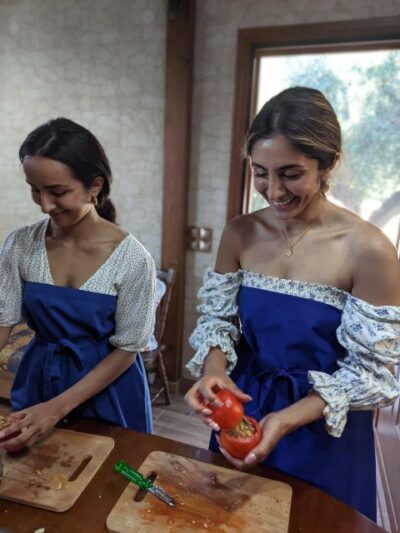
Browse the lists this tour appears in